ÇAKÜ Academic's Research on Early Detection of Ovarian Cancer Receives Wide National Media Coverage
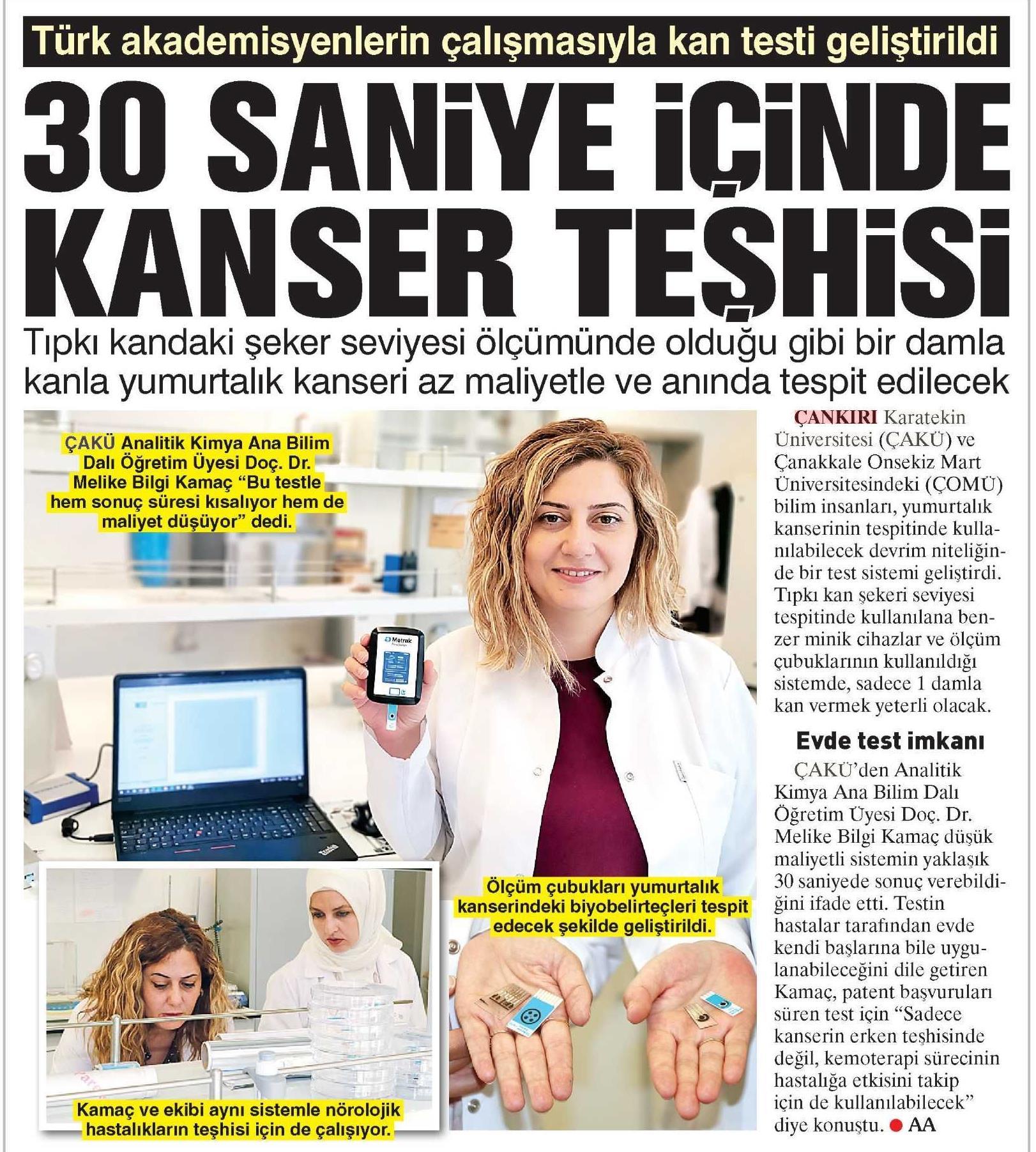
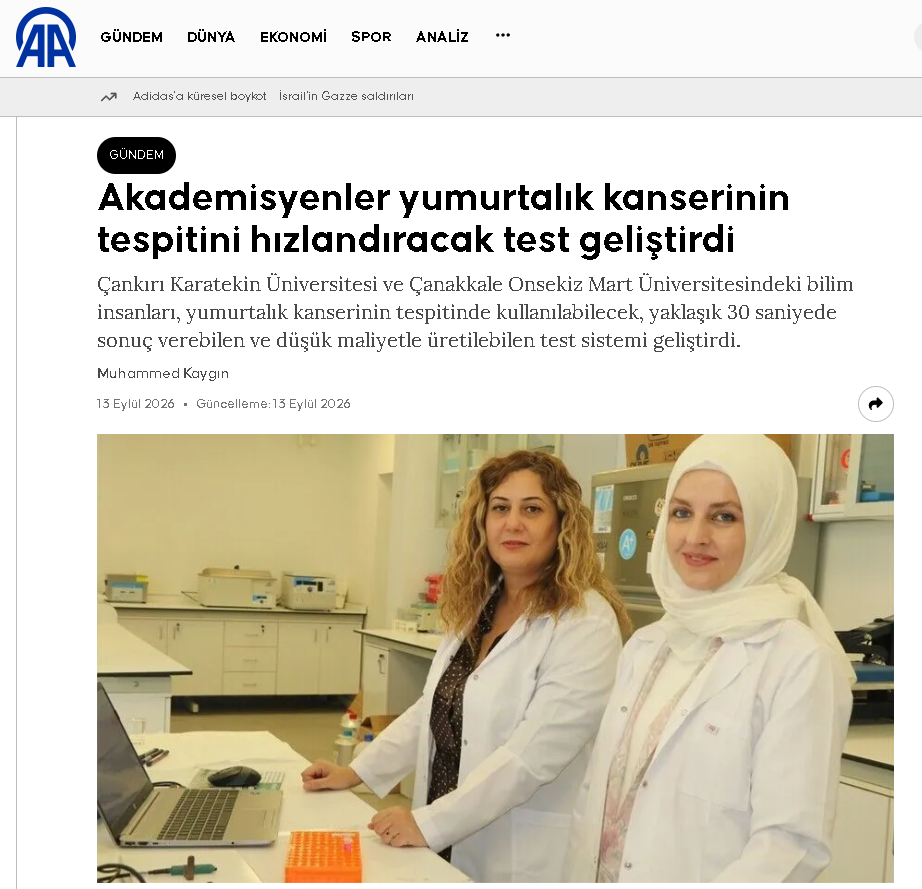
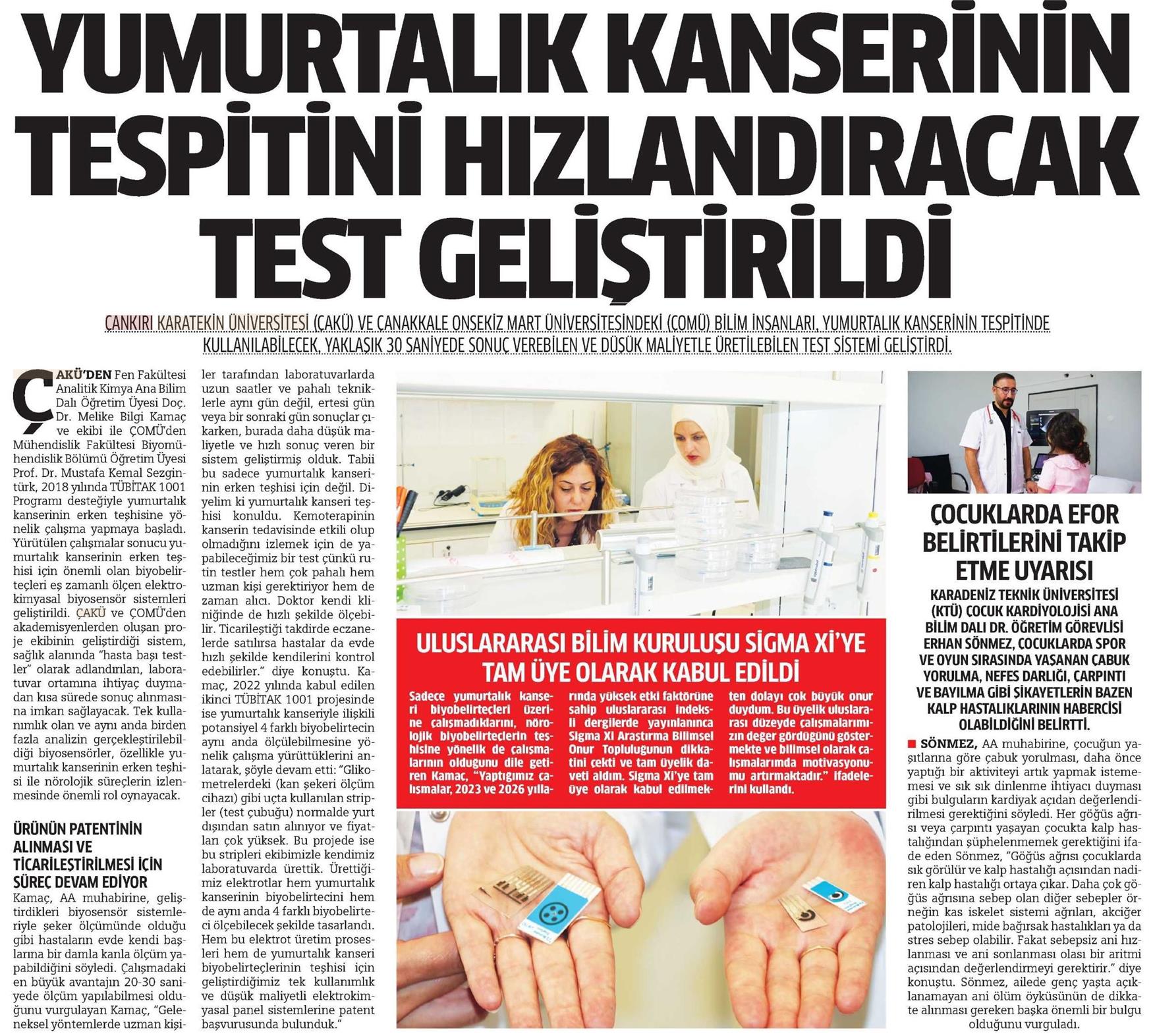
A biosensor system developed by by Assoc. Prof. Dr. Melike Bilgi Kamaç of Çankırı Karatekin University’s (ÇAKÜ) Faculty of Science, in collaboration with academics from Çanakkale Onsekiz Mart University (ÇOMÜ), has been featured in a report by Anadolu Agency for its potential to accelerate the detection of ovarian cancer. The test system, which delivers results in roughly 20-30 seconds at low cost, has since drawn wide coverage across Türkiye's national media.
Te resarch team, including Assoc. Prof. Dr. Melike Bilgi Kamaç from ÇAKÜ’s Department of Analytical Chemistry and Prof. Dr. Mustafa Kemal Sezgintürk from ÇOMÜ’s Department of Bioengineering, has spent several years working toward earlier detection of ovarian cancer. Their research, which began in 2018 with support from the TÜBİTAK 1001 Program, led to the development of electrochemical biosensor systems capable of measuring several ovarian cancer biomarkers simultaneously.
Test System Delivers Results in Approximately 30 Seconds
The biosensor system holds real promise for point-of-care testing, delivering fast results without the need for a laboratory. Designed for single use and capable of running multiple analyses at once, the sensors could serve not only in early ovarian cancer detection, but also in monitoring treatment progress and assessing neurological processes.
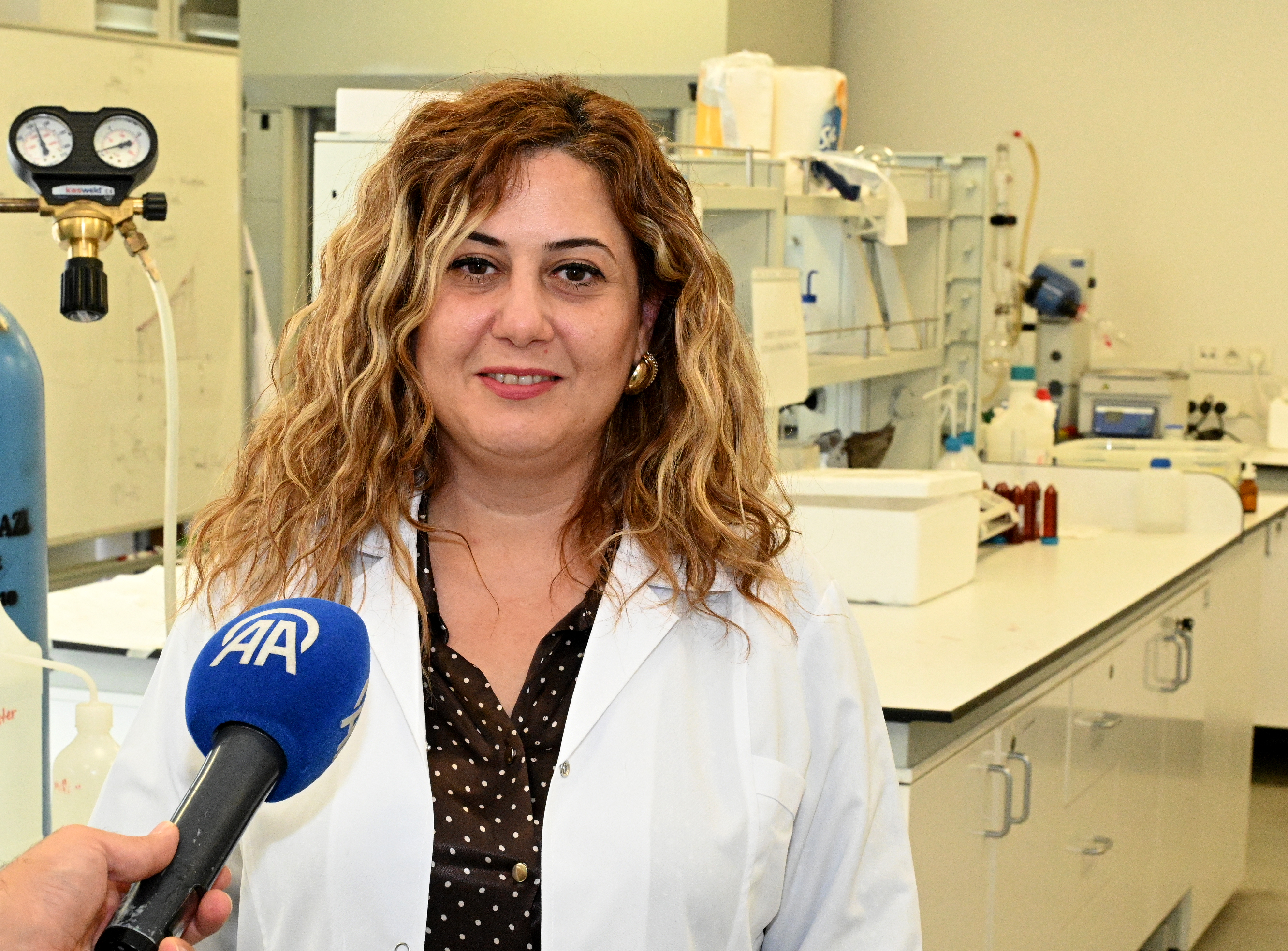
Assoc. Prof. Dr Kamaç Discusses the Research with Anadolu Agency
Speaking to an Anadolu Agency correspondent, Kamaç explained that the system allows for rapid measurement from a single drop of blood, much like a blood glucose meter. She pointed to its short measurement time as one of its biggest advantages, noting that it offers a faster, cheaper alternative to conventional lab-based analysis, which typically requires specialized personnel and can take considerable time to produce results.
The system's usefulness, she said, extends beyond diagnosis:
"With conventional methods, analyses are carried out by specialists in laboratories using costly techniques, and results often aren't available until the next day, or later. We've developed a system that delivers results quickly and affordably. Its use isn't limited to early detection, once a patient has been diagnosed with ovarian cancer, for instance, the test could also help monitor whether chemotherapy is working, since routine testing tends to be expensive, specialist-dependent, and slow."
If commercialized, Kamaç said, the system could see even broader use, allowing physicians to run rapid tests directly in their clinics, or, if made available through pharmacies, letting patients test at home.
Four Different Biomarkers Can Be Measured Simultaneously
Assoc. Prof. Dr. Kamaç stated that, under a second TÜBİTAK 1001 project approved in 2022, they had been working on a system capable of simultaneously measuring four different potential biomarkers associated with ovarian cancer.
As part of the project, the team produced the test strips -typically used in glucose meters- domestically in their own lab, and designed electrodes capable of measuring multiple biomarkers simultaneously.
"The strips used at the tip of blood glucose meters are normally imported and quite expensive. In this project, our team produced them ourselves, in the lab. The electrodes we developed can measure ovarian cancer biomarkers, and up to four different biomarkers, simultaneously."
Kamaç noted that patent applications have been filed for both the electrode production process and the disposable, low-cost electrochemical panel system developed to detect ovarian cancer biomarkers, with patenting and commercialization efforts still underway.
International Recognition Through Sigma Xi Membership
Kamaç noted that, in addition to ovarian cancer biomarkers, the team also conducts research on the detection of neurological biomarkers. Her studies, published in high-impact, internationally indexed journals in 2023 and 2026, caught the attention of Sigma Xi, the Scientific Research Honor Society, an international scientific organization that subsequently admitted her as a full member.
Kamaç said the membership reflects international recognition of her research and has given her added motivation to continue her scientific work.